For millions of professionals, spending hours sitting at a desk is simply part of the daily routine. Whether you're working from home or commuting to an office, prolonged sitting can take a toll on your body. Tight hips, stiff shoulders, poor posture, and lower back discomfort are just a few common complaints among desk workers. Fortunately, Pilates offers an effective way to counteract many of the physical challenges associated with a sedentary workday.
At ChaiseFitness, we believe that movement is essential for maintaining a healthy, balanced lifestyle. Incorporating Pilates into your fitness routine can help improve flexibility, strengthen important muscle groups, and make everyday activities more comfortable. Here's why Pilates is particularly beneficial for people who spend much of their day behind a desk.
1. Pilates Helps Improve Posture
One of the biggest challenges associated with desk work is maintaining proper posture. Sitting for extended periods, especially while looking down at a laptop or leaning toward a computer screen, can encourage rounded shoulders, forward head positioning, and slouching.
Pilates emphasizes proper body alignment, spinal awareness, and controlled movements. Through exercises that strengthen the core, upper back, and surrounding stabilizing muscles, Pilates can help desk workers develop better postural habits.
Over time, improved muscular endurance and body awareness can make it easier to maintain a comfortable, upright sitting position throughout the workday.
2. Strengthens the Core to Support Your Back
Lower back discomfort is a common concern for office workers. Prolonged sitting, limited movement, and insufficient muscular support can contribute to stiffness and discomfort.
Pilates is particularly effective at targeting the deep abdominal muscles, obliques, and muscles surrounding the spine. These muscle groups play an important role in stabilizing the torso and supporting everyday movements.
By strengthening the core, Pilates can help improve spinal stability and movement control. A stronger core may also make activities such as standing, walking, lifting, and sitting for extended periods feel more manageable.
3. Helps Relieve Tight Hips and Muscles
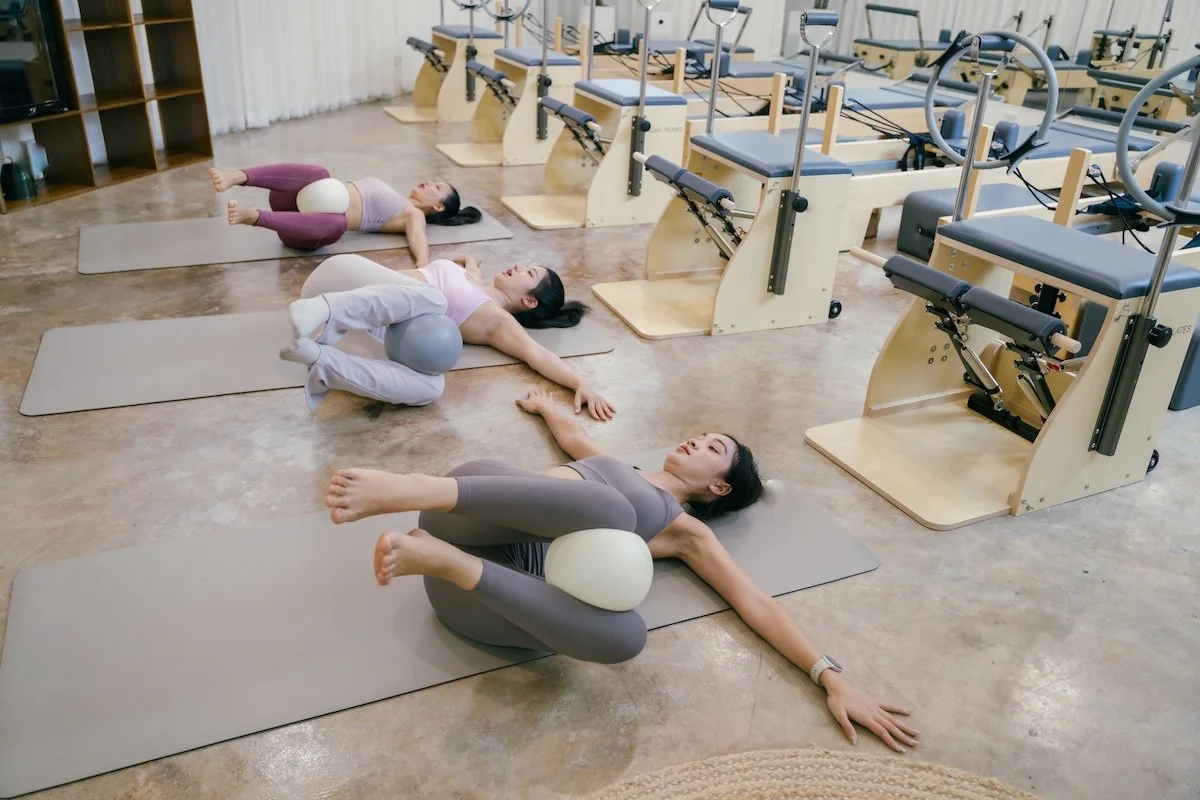
When you sit for several hours each day, your hip flexors remain in a shortened position for prolonged periods. This can contribute to feelings of tightness, particularly when transitioning from sitting to standing.
Pilates incorporates movements that encourage hip mobility, flexibility, and balanced muscle engagement. Exercises focusing on the hips, glutes, hamstrings, and surrounding muscles can help address some of the stiffness associated with a desk-based lifestyle.
Regular Pilates sessions can also encourage a greater range of motion, making everyday activities such as walking, climbing stairs, and bending more comfortable.
4. Reduces Neck and Shoulder Tension
Desk workers frequently experience tension in their necks, shoulders, and upper backs. Hours spent typing, using a mouse, or looking at screens can contribute to muscular fatigue and stiffness.
Pilates encourages controlled shoulder movements, upper-body strength, and awareness of neck positioning. Many exercises also emphasize breathing and relaxation, helping participants recognize and release unnecessary muscular tension.
By improving shoulder mobility and strengthening supporting muscles, Pilates can help desk workers move more comfortably and develop healthier movement patterns.
5. Encourages Movement After Long Periods of Sitting
One of the greatest benefits of Pilates for desk workers is that it encourages full-body movement. Unlike activities that focus exclusively on individual muscles, Pilates incorporates coordinated exercises that challenge strength, balance, mobility, and flexibility.
This makes Pilates an excellent complement to a sedentary lifestyle. Regular sessions provide opportunities to move through different positions and engage muscles that may receive limited attention during the workday.
Combining Pilates with short walking breaks and regular changes in sitting position can help create a healthier daily routine.
6. Helps Reduce Stress and Improve Focus
The benefits of Pilates extend beyond physical fitness. Tight deadlines, demanding schedules, and constant screen time can leave office workers feeling mentally exhausted.
Pilates emphasizes mindful breathing, concentration, and intentional movement. Focusing on these elements during a workout can provide a welcome mental break from professional responsibilities.
Many participants find that Pilates helps them feel refreshed, relaxed, and more connected to their bodies. Making time for regular exercise can also support overall emotional well-being.
Experience the Benefits of Pilates at ChaiseFitness
If you spend most of your workday sitting, incorporating Pilates into your fitness routine can be an excellent investment in your long-term health and comfort.
Located on Manhattan's Upper East Side, ChaiseFitness offers contemporary Pilates instruction through private sessions and small group classes. Our patented Reinvention Method combines Pilates fundamentals, ballet-inspired movements, and resistance training to create engaging, full-body workouts.
Whether you're interested in improving posture, building core strength, increasing flexibility, or simply becoming more active, our experienced instructors can help you find an approach suited to your fitness goals.
Don't let long hours behind a desk limit your movement and well-being. Discover how Pilates can help you build a stronger, more balanced body.
Visit ChaiseFitness or call 212-744-6100 to learn more about our Pilates classes and private sessions on Manhattan's Upper East Side.