Pilates Equipment Breakdown: Reformer, Cadillac, Chair & Barrel
If you’ve walked into a Pilates studio and felt overwhelmed by all the different machines — from sliding carriages to canopy-style frames — you’re not alone. Many people begin with mat classes or maybe a single machine, only to realize there’s a whole world of Pilates apparatus out there. In this post, we’re breaking down the four most common pieces of Pilates equipment — the Pilates Reformer, Pilates Cadillac, Wunda Chair (often simply “Chair”), and Pilates Barrel — and helping you understand which one might suit your body, space, and fitness goals best.
The Core Principles of Pilates First
Before diving into machines, it’s useful to remember why these devices exist. The whole point of Pilates — a method devised by Joseph Pilates — is to cultivate core strength, alignment, mobility, and mindful movement through breath, spinal alignment, and controlled motion.
Mat-based classes remain a foundation, but once you add apparatus, you can scale resistance, refine control, and expand the range of exercises available.
Pilates Reformer — The Workhorse
What is it?
The Reformer is the classic Pilates machine — a bed-like frame with a sliding carriage, adjustable springs for resistance, footbar, straps for hands or feet, and often shoulder blocks and a headrest.
Why it’s great
Versatility: You can do a huge range of exercises lying, sitting, kneeling or standing; full-body conditioning, strength, core, flexibility.
Adaptability: The spring tension is adjustable — good for beginners getting used to resistance, or advanced users seeking challenge.
Balanced strength & mobility: Excellent for building core stability, muscle control, and overall functional strength — very aligned with Pilates’ core goals.
Ideal for:
Beginners or seasoned Pilates practitioners.
Anyone looking for a well-rounded full-body workout.
People focused on core strength, muscle toning, and overall stability.
If you’ve never tried equipment Pilates before, the Reformer is often the perfect first step.
Pilates Barrel — Mobility, Flexibility & Spinal Health
What is it?
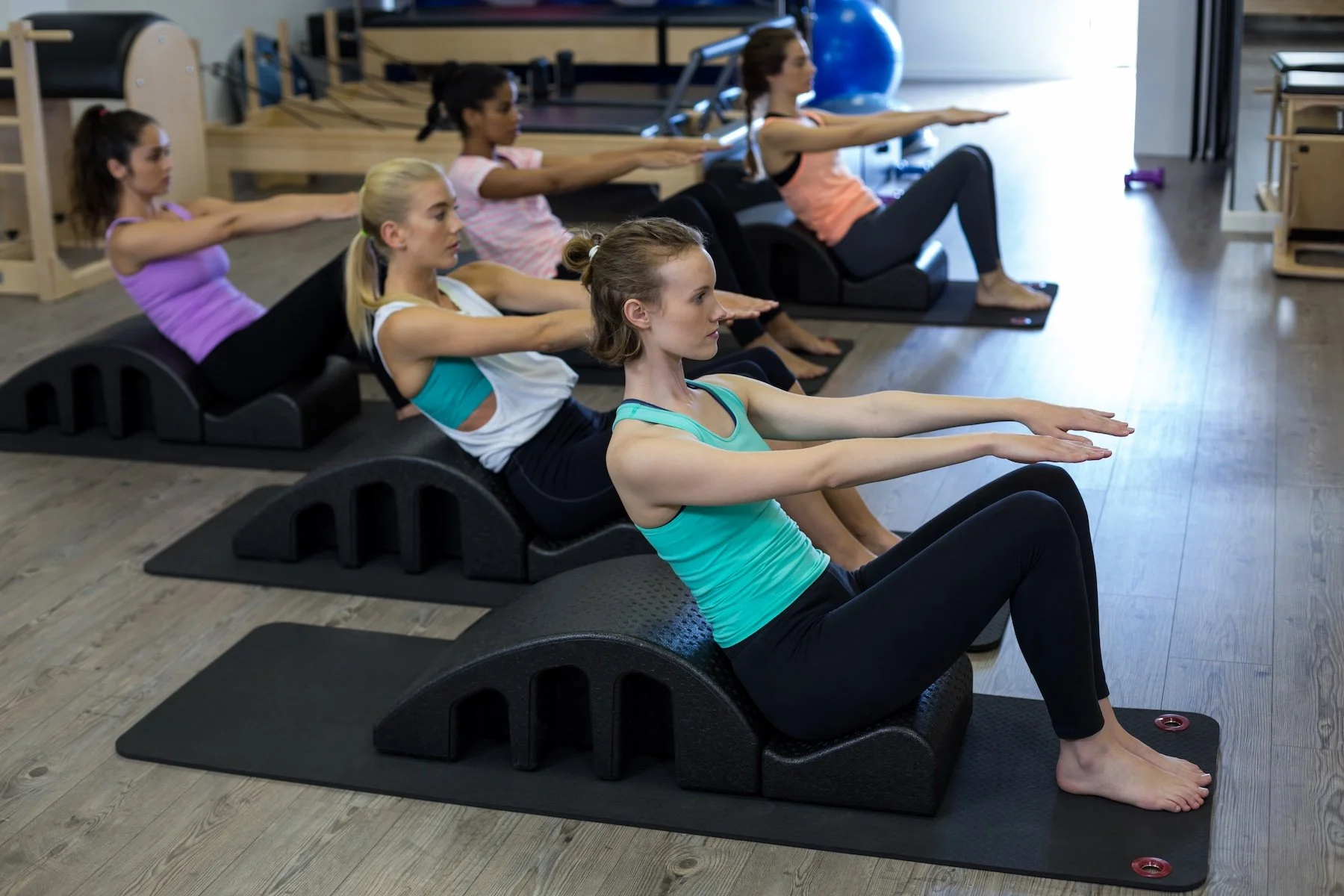
Barrels come in several shapes: the large “Ladder Barrel,” a Spine Corrector (smaller, curved arch), and smaller barrels used for mat work. The Ladder Barrel features a padded curved “barrel” surface with an attached ladder-like frame; the barrel is designed to support the spine’s natural curve.
What it does best
Spinal articulation & mobility: The curved surface encourages spine flexion, extension, and gentle twisting, which helps relieve tension and improve mobility.
Flexibility and posture work: Barrel exercises can lengthen the spine, open the chest and shoulders, improve posture, and aid in flexibility — especially in back and trunk.
Rehabilitation and body awareness: Because movement is often controlled and subtle, Barrels are excellent for promoting better alignment, muscular balance, and rehabilitating the spine or posture.
Ideal for:
People seeking better flexibility, posture, and spinal mobility.
Those recovering from back tightness or seeking gentle spine-friendly movement.
Anyone wanting to complement stronger Pilates work (on Reformer/Cadillac) with deep mobility and stretch.
Pilates Cadillac (Trapeze Table) — The Swiss Army Knife
What is it?
The Cadillac — also called the trapeze table — resembles a canopy-bed: a flat mat table framed by vertical and horizontal bars, springs, straps, a push-through bar, a roll-down bar, and sometimes trapeze-like loops.
Why it stands out
Extreme versatility: You can work lying, sitting, kneeling, standing — even hanging. That allows for a wide variety of movements and angles.
Mobility, spinal work & rehabilitation: The Cadillac is excellent for spinal articulation, decompression, shoulder mobility and controlled stretching.
Full-body strength & flexibility: It’s often considered the most comprehensive Pilates apparatus — capable of building strength, improving flexibility, and fine-tuning coordination.
Ideal for:
People seeking more than just strength — mobility, spinal health, posture, flexibility.
Those recovering from injury, with back/shoulder issues, or needing gentle support.
Beginners who want a supported, adjustable environment — as well as advanced practitioners exploring deeper movement ranges.
In short: If you want a “do everything” tool that gives you both challenge and support, the Cadillac is your go-to.
Wunda Chair — Compact, Challenging & Space-Smart
What is it?
The Chair is a small, box-like piece of equipment — typically a padded seat with a spring-loaded pedal (or pedals) you press down with your foot, hand or other part of the body.
Why you might like it
Compact & versatile: Because it takes up much less space than a Reformer or Cadillac, the Chair is studio- and home-friendly.
Core, balance & functional strength focus: Exercises tend to challenge stability, coordination and deep core muscles — even small imbalances become obvious and can be corrected.
Great complement to other apparatus: Because it isolates and emphasizes balance and control, the Chair can reveal weaknesses or asymmetries you might overlook on larger machines.
Ideal for:
People in smaller spaces (home studios or compact Pilates gyms).
Those wanting to build core stability, coordination, and balance.
Anyone looking to refine control and muscular alignment — often those with some Pilates experience already.
Why Many Pilates Studios (Like ChaiseFitness) Benefit from Having All Four
One of the beauties of Pilates is that these apparatuses aren’t competing — they’re complementary. A well-rounded studio offers multiple tools because each serves a different purpose: from strength and coordination (Reformer, Chair) to mobility, spinal health and flexibility (Cadillac, Barrel), to rehabilitation or injury-prevention work (Cadillac, Barrel, Chair).
This variety lets instructors tailor sessions based on individual needs: maybe a client comes in for core strengthening, another for back mobility, and another for posture and spinal alignment. And over time, a balanced Pilates routine with different apparatus can lead to stronger, more flexible, and better-aligned bodies.
At ChaiseFitness, offering a mix of these pieces allows you to meet clients wherever they are — whether they’re brand-new to Pilates, recovering from injury, or looking to challenge themselves in new ways.
Final Thoughts
Choosing among Reformer, Cadillac, Chair, and Barrel doesn't have to feel overwhelming. Think about your current mobility, strength, goals, space, and what you want to achieve.
If you’re new to Pilates and want a full-body foundation, start with the Reformer.
If you have posture concerns, spinal stiffness, or need gentle rehab, the Cadillac or Barrel may serve you best.
If you’re working with limited space or want to refine control, the Chair offers a compact but potent tool.
And remember — you don’t have to stick to one. Many seasoned practitioners weave between machines in different sessions. That variety keeps your body challenged and engaged.
If you’re curious about creating a balanced Pilates program at ChaiseFitness (or at home), feel free to reach out — I’d be happy to design a sample weekly plan integrating all four apparatus based on your goals.