How to Progress Your Pilates Practice Without Plateauing
If you've been doing Pilates for months now—maybe even years—you might notice something frustrating: despite your consistency, progress seems to stall. Your form feels stable; your body doesn’t feel challenged the way it used to. First: know you’re not alone. Many Pilates practitioners eventually hit a plateau—a point where the body adapts so well to the routine it stops changing.
But plateauing doesn’t mean you’ve hit your peak. Instead, it’s a signal that your body is ready for something new. At ChaiseFitness, we believe Pilates is a journey, not a destination. Here’s how you can push past that plateau and keep your practice evolving.
1. Return to the Fundamentals: Breathe. Align. Control.
Plateaus often happen when we lose mental focus on the basics. In Pilates, breath, alignment, core engagement, and control are the cornerstones of every move—even the most advanced ones.
Breathe with intention. Rather than letting breath become background noise, synchronize your inhale and exhale with each movement: inhale to prepare/lengthen; exhale to engage your core or deepen a stretch.
Check your posture and alignment. Whether on the mat or reformer, pay attention to spine, pelvis, and shoulder positioning. This ensures movements are precise and effective.
Move with control, not momentum. Slow down your repetitions; quality and form always win over speed or volume.
Often, breaking through a plateau is as simple as leaning into the fundamentals with renewed focus.
2. Add Variety: New Moves, New Equipment, New Challenges
One of the main reasons progress stalls is repetition. The body adapts, and the same routine no longer stimulates growth.
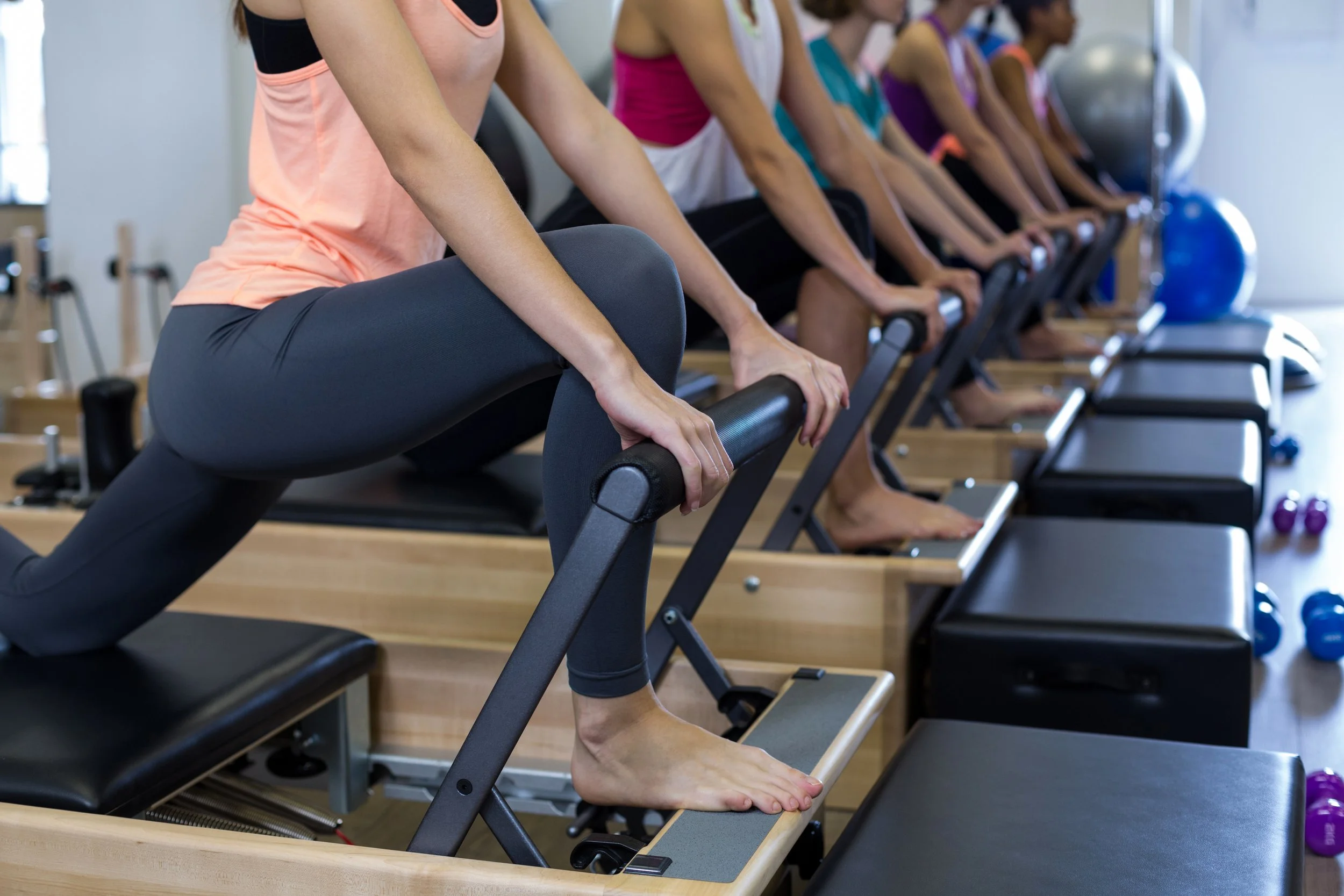
Explore different Pilates formats. If you’ve mostly done mat work, try equipment-based classes (Reformer, Cadillac, Chair), or vice versa — each offers distinct challenges.
Introduce progressive overload. That could mean increasing resistance, adding holds (pauses at challenging points), or lengthening time under tension.
Use props or alternate surfaces. Resistance bands, magic circles, small balls, or even wall-based Pilates variations can activate muscles differently and bring new intensity.
Variety doesn’t just keep things interesting — it forces the body to adapt again, igniting strength gains and enhanced mobility.
3. Periodize & Set Intentional Goals
Continuous progress doesn’t come from doing the same thing harder. Smart progression relies on structure. That’s why many advanced Pilates programs use periodization: alternating phases of higher-intensity, lower-volume work with phases focused on recovery or mobility.
Coming from that philosophy:
Set short-term and long-term goals. Maybe it’s mastering a trickier move (e.g., teaser, side plank variation, reformer sequence), increasing hold times, or improving flexibility.
Track your progress. Use a workout journal or log — note reps, holds, resistance levels, or subjective markers like balance, posture, or ease of movement. Small wins matter.
Plan for recovery. A strong practice needs rest. Give your body time to rebuild — especially after challenging sessions — to avoid burnout and injury.
Having a roadmap helps you purposefully challenge yourself instead of spinning your wheels.
4. Mix Pilates With Complementary Movement & Recovery
Sometimes, stagnation isn’t about Pilates — it’s about overall movement patterns, muscle balance, or lack of mobility. Cross-training and recovery practices can help you grow in ways mat or reformer workouts alone can’t.
Introduce complementary disciplines. Yoga, swimming, light strength training, or mobility work can improve flexibility, joint range, and muscular balance — benefiting your Pilates.
Prioritize mobility and flexibility. Pilates progresses best when your body moves freely. Incorporate dynamic stretching, joint mobility exercises, and even foam rolling outside of your Pilates sessions.
Don’t neglect rest and recovery. Overtraining or skipping rest days might feel productive — but your body grows stronger during recovery. Mix light movement days with deeper sessions so you stay active but balanced.
You’ll likely see improved posture, better muscles engagement, and fresh motivation.
5. Seek Guidance & Community — Because Pilates Is as Much Mental as Physical
It can be hard to notice the subtle things that keep you stuck. Sometimes, the best way forward is with eyes, experience, or inspiration beyond your own.
Work with an instructor or try a new class level. A teacher can offer personalized cues — about alignment, form, breath, or even recommend advanced variations you might not discover solo.
Change up your instructor or class style. Different teachers bring different strengths; alternating classes can expose you to new cues, styles, and challenges.
Join a Pilates community. Whether in a class, studio, or online — seeing others progress, trading tips, and staying accountable can reignite your momentum.
Pilates isn’t a solo endurance test; it’s a shared — ever-evolving — journey.
At ChaiseFitness: Your Next Step Forward
Hitting a plateau doesn’t mean you’ve reached your limit — it means you’re ready for the next level. At ChaiseFitness, whether you’re new to Pilates or have been practicing for years, there’s always a way forward: through smarter programming, mindful movement, and community support.
If you’ve been feeling stuck lately, consider:
Revisiting your breath, alignment, and core focus
Trying a different format — perhaps reformer, prop-based, or mobility-focused
Setting a new goal — maybe learning a new sequence or increasing hold times
Incorporating active recovery or mobility work between sessions
Joining a class or workshop to see Pilates from a fresh perspective
Your body is telling you it’s ready — now it’s your move.
Plateaus are part of the journey. They don’t signal an end. They mark a turning point — an opportunity to evolve, refine, and reach deeper levels of strength, control, and awareness. Keep moving forward with intention, variety, and heart — and your Pilates practice will continue unfolding.