How Pilates Improves Functional Strength
When people think about getting stronger, they often picture lifting heavy weights or performing high-intensity exercises. While traditional strength training can certainly build muscle, strength is about more than how much weight you can lift. Being strong also means being able to move efficiently, maintain balance, stabilize your body, and perform everyday activities with confidence. This is where functional strength becomes especially important.
Pilates is an excellent way to develop functional strength because it trains the body to work as a connected system. Through controlled movements, resistance, core engagement, and an emphasis on proper alignment, Pilates can help you build strength that translates into the way you move both inside and outside the studio.
At ChaiseFitness, our contemporary approach to Pilates helps clients develop the strength, stability, and body awareness needed for a stronger, more active lifestyle.
What Is Functional Strength?
Functional strength refers to your body's ability to perform movements you use in everyday life. Think about carrying groceries, climbing stairs, getting up from a chair, lifting something from the floor, reaching overhead, or maintaining your balance on an uneven surface.
These activities rarely depend on just one muscle. Instead, multiple muscle groups must coordinate to produce stable, efficient movement.
Traditional exercises that isolate individual muscles can be valuable, but Pilates takes a more integrated approach. Many Pilates exercises challenge several muscle groups simultaneously while requiring you to stabilize your core and maintain proper positioning.
Over time, this can help your body become stronger at movement itself—not just at performing a particular exercise.
Building a Stronger Core
Core strength is one of the foundations of functional movement.
Your core includes much more than the visible abdominal muscles. It involves deep abdominal muscles as well as muscles surrounding the pelvis, hips, and spine. Together, these muscles provide stability and create a strong foundation for movement.
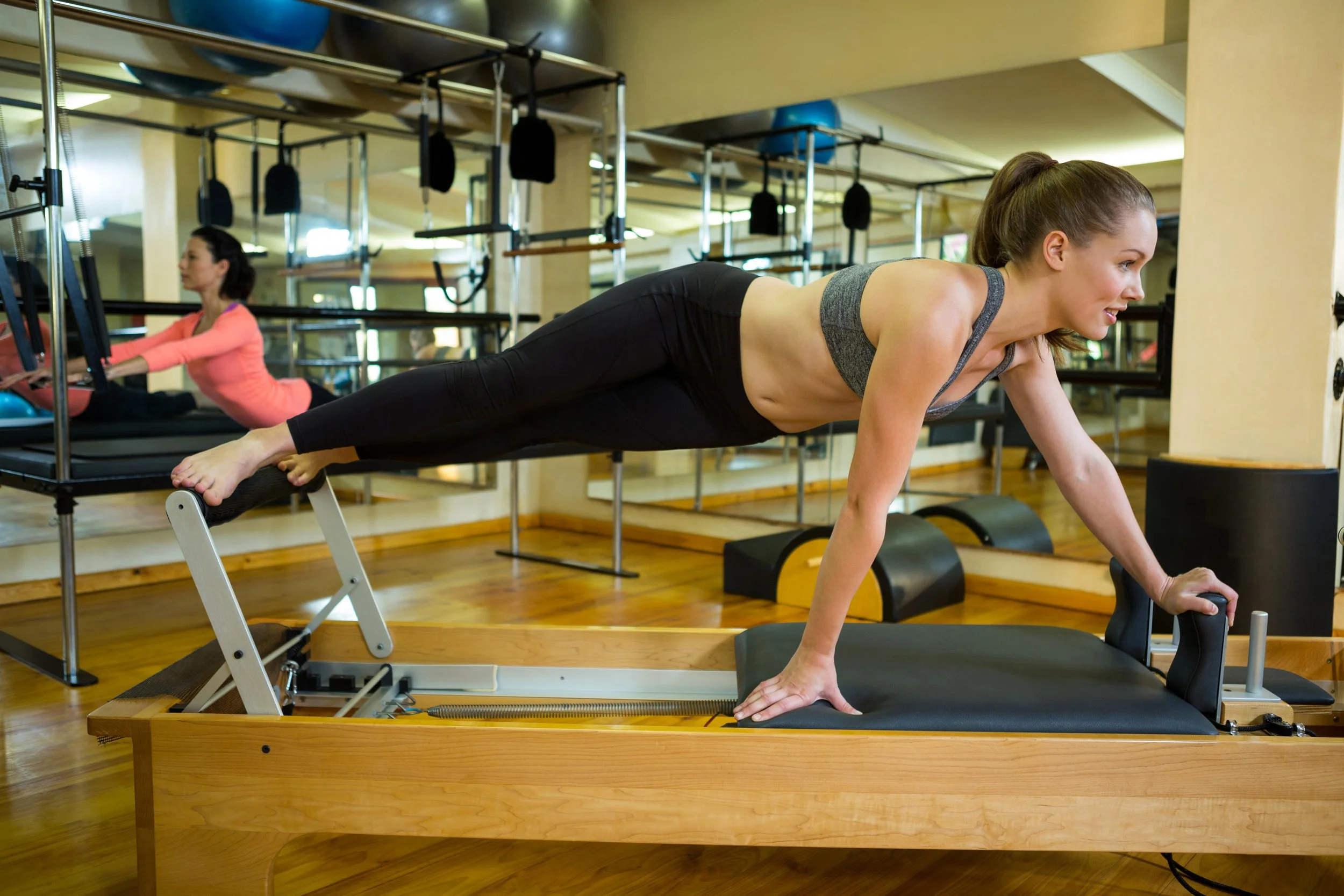
Pilates places significant emphasis on core engagement throughout each exercise. Whether you're moving your arms, extending your legs, or performing a full-body movement, you're often asked to maintain stability through your center.
A stronger, more stable core can support everything from bending and lifting to walking, running, and participating in sports.
Training Multiple Muscles to Work Together
One of the major differences between functional training and isolated strength exercises is coordination.
Everyday movements require muscles throughout your body to work together. Pilates reflects this by incorporating compound, coordinated movements that challenge the upper body, lower body, and core at the same time.
For example, an exercise may require you to stabilize your torso while moving your arms against resistance. Another may challenge your legs and glutes while requiring balance and core control.
Training these movement patterns can help improve coordination and make physical activities feel more controlled and efficient.
Improving Balance and Stability
Functional strength isn't only about generating force. It's also about controlling your body.
Pilates strengthens many of the smaller stabilizing muscles that help support your joints and maintain proper positioning. These muscles play an important role in balance, posture, and overall movement quality.
Better stability can be useful during exercise, but it is equally important in everyday situations. Walking up stairs, stepping off a curb, carrying something heavy, or quickly changing direction all require your body to stabilize itself.
Pilates helps develop this control through slow, deliberate movements that require concentration and precise positioning.
Strengthening Through a Greater Range of Motion
Being strong is most useful when you can maintain that strength throughout your natural range of motion.
Pilates combines strength and mobility rather than treating them as completely separate fitness goals. Many movements challenge muscles while they lengthen, helping you develop control through different positions.
This combination can be particularly beneficial for people who spend significant portions of the day sitting. Improving mobility while strengthening the muscles responsible for posture and stability can help create more efficient movement patterns.
Developing Better Body Awareness
Another important element of functional strength is knowing how your body is moving.
Pilates requires concentration. You pay attention to your posture, breathing, alignment, muscle engagement, and movement quality throughout a workout.
As your body awareness improves, you may become better at recognizing inefficient movement patterns and correcting them. That awareness can carry over into other workouts, sports, and everyday activities.
Instead of simply becoming stronger, you're learning how to use that strength more effectively.
Experience Functional Strength at ChaiseFitness
Pilates isn't just about flexibility or developing a strong core. It's a full-body approach to fitness that can improve strength, stability, mobility, coordination, balance, and movement quality.
At ChaiseFitness on Manhattan's Upper East Side, we take these benefits even further through contemporary Pilates instruction. Our private and duet sessions incorporate traditional Pilates equipment including the Reformer, Cadillac, Chair, and Ladder Barrel, while our patented Reinvention Method blends Pilates fundamentals with ballet and strength training.
With small group classes and personalized instruction, ChaiseFitness provides options for different fitness levels and goals.
Whether you want to complement your existing workouts, improve athletic performance, or simply feel stronger during everyday activities, Pilates can help you develop strength that has a purpose.
Functional strength isn't only about what you can lift—it's about what your body can do. Discover how Pilates at ChaiseFitness can help you move better, feel stronger, and build a more capable body for everyday life.