
Can Pilates Help Reduce Stress and Improve Mental Wellness?
In today’s fast-paced world, stress has become a common part of daily life. Between demanding careers, family responsibilities, and constant digital distractions, many people are searching for healthier ways to manage stress and improve mental well-being. One increasingly popular approach is Pilates—a mind-body exercise method known for building strength, improving posture, and enhancing flexibility. But beyond the physical benefits, many practitioners report that Pilates also helps them feel calmer, more focused, and mentally balanced.
So, can Pilates really reduce stress and improve mental wellness? Research and real-world experience suggest the answer is yes.
The Mind-Body Connection in Pilates
Pilates was designed as a holistic exercise system that connects physical movement with mental focus. Unlike many traditional workouts that prioritize intensity or speed, Pilates emphasizes control, precision, and awareness. Every movement is performed deliberately, encouraging participants to stay present and focused on their bodies.
This type of mindful movement naturally shifts attention away from everyday stressors. Instead of worrying about work deadlines or personal obligations, participants concentrate on breathing, posture, and controlled movement. This process can create a meditative effect that helps calm the mind and reduce mental tension.
According to research, moderate physical activities like Pilates can positively influence psychological health by lowering stress levels and improving mood. Studies have also shown measurable reductions in anxiety and depression symptoms among people who regularly practice Pilates.
Controlled Breathing Helps Calm the Nervous System
One of the key components of Pilates is controlled breathing. Breathing techniques are integrated into every movement, encouraging deep inhalations and complete exhalations. This type of breathing activates the parasympathetic nervous system—the part of the body responsible for relaxation and recovery.
When the parasympathetic system is engaged, the body experiences several calming effects, including a slower heart rate, reduced blood pressure, and decreased stress hormone levels. Over time, practicing this type of breathing can help individuals become more resilient to stress and better equipped to manage anxiety.
Because breathing is central to the practice, Pilates becomes more than just physical exercise—it becomes a powerful stress-management tool.
Physical Movement Releases Built-Up Tension
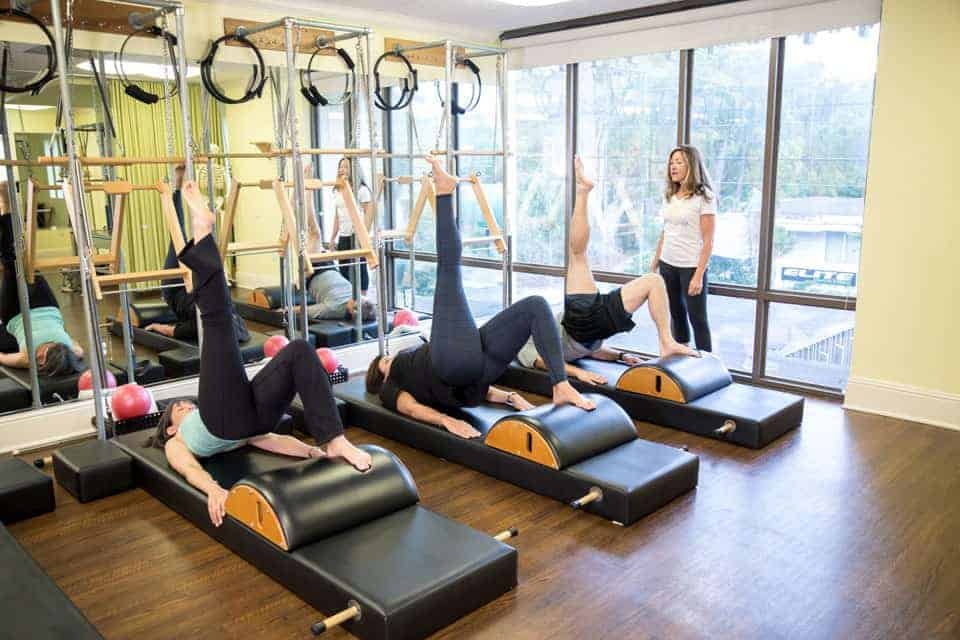
Stress often manifests physically in the body. Tight shoulders, stiff neck muscles, and lower back discomfort are common signs that stress is accumulating. Pilates helps release this tension through controlled stretching and strengthening movements.
By improving flexibility and encouraging proper alignment, Pilates allows the body to move more freely and efficiently. As muscles relax and posture improves, physical discomfort decreases, which can significantly improve overall mood and mental clarity.
Research has shown that Pilates programs can lead to reductions in anxiety, depression, and stress-related symptoms while also improving overall well-being.
Improved Sleep and Mental Clarity
Another major contributor to stress and poor mental health is inadequate sleep. Racing thoughts and physical tension can make it difficult to fall asleep or stay asleep throughout the night.
Regular Pilates practice promotes relaxation and physical fatigue in a healthy way, making it easier for the body to transition into restful sleep. Studies have shown that Pilates training can significantly improve sleep quality while also reducing fatigue, anxiety, and depressive symptoms.
Better sleep leads to improved concentration, emotional balance, and resilience during stressful situations—creating a positive cycle that supports overall mental wellness.
Building Confidence and Emotional Balance
Pilates also helps build confidence by encouraging progress and self-awareness. As individuals improve their strength, balance, and coordination, they often feel more capable and empowered.
Achieving new physical milestones—even small ones—can boost self-esteem and provide a sense of accomplishment. This sense of progress can have a powerful impact on mental health, especially for people who feel overwhelmed by stress or daily pressures.
Additionally, Pilates encourages a deeper awareness of the body. This awareness helps individuals recognize when they are holding tension or experiencing stress, allowing them to consciously relax and reset.
The Benefits of Group Classes
Participating in Pilates classes can also offer social and emotional benefits. Exercising in a supportive environment provides motivation, accountability, and a sense of community.
Group fitness activities have been shown to enhance mood and reduce feelings of isolation, which can further improve mental health. Even simply sharing a positive wellness experience with others can help people feel more connected and supported.
Pilates as Part of a Healthy Lifestyle
While Pilates can significantly improve stress management and mental wellness, it works best when combined with other healthy habits. Regular exercise, balanced nutrition, quality sleep, and mindfulness practices all contribute to better mental health.
Pilates fits naturally into this lifestyle because it supports both physical and emotional well-being. Its low-impact nature also makes it accessible for people of many ages and fitness levels.
Experience the Mental Benefits of Pilates
If you’re looking for a healthy way to reduce stress and improve your overall well-being, Pilates may be the perfect addition to your routine. The combination of mindful movement, controlled breathing, and strengthening exercises helps calm the mind while strengthening the body.
At ChaiseFitness, Pilates classes are designed to support both physical fitness and mental balance. Whether you’re new to Pilates or looking to deepen your practice, incorporating this mind-body workout into your routine can help you feel stronger, calmer, and more focused every day.